
Chongqing: The 8D Mountain City Between Two Rivers and the Cyberpunk Capital
By PandaTrip Editorial · 7 min read · Verified 2026-09-06
Verified 2026-09-06
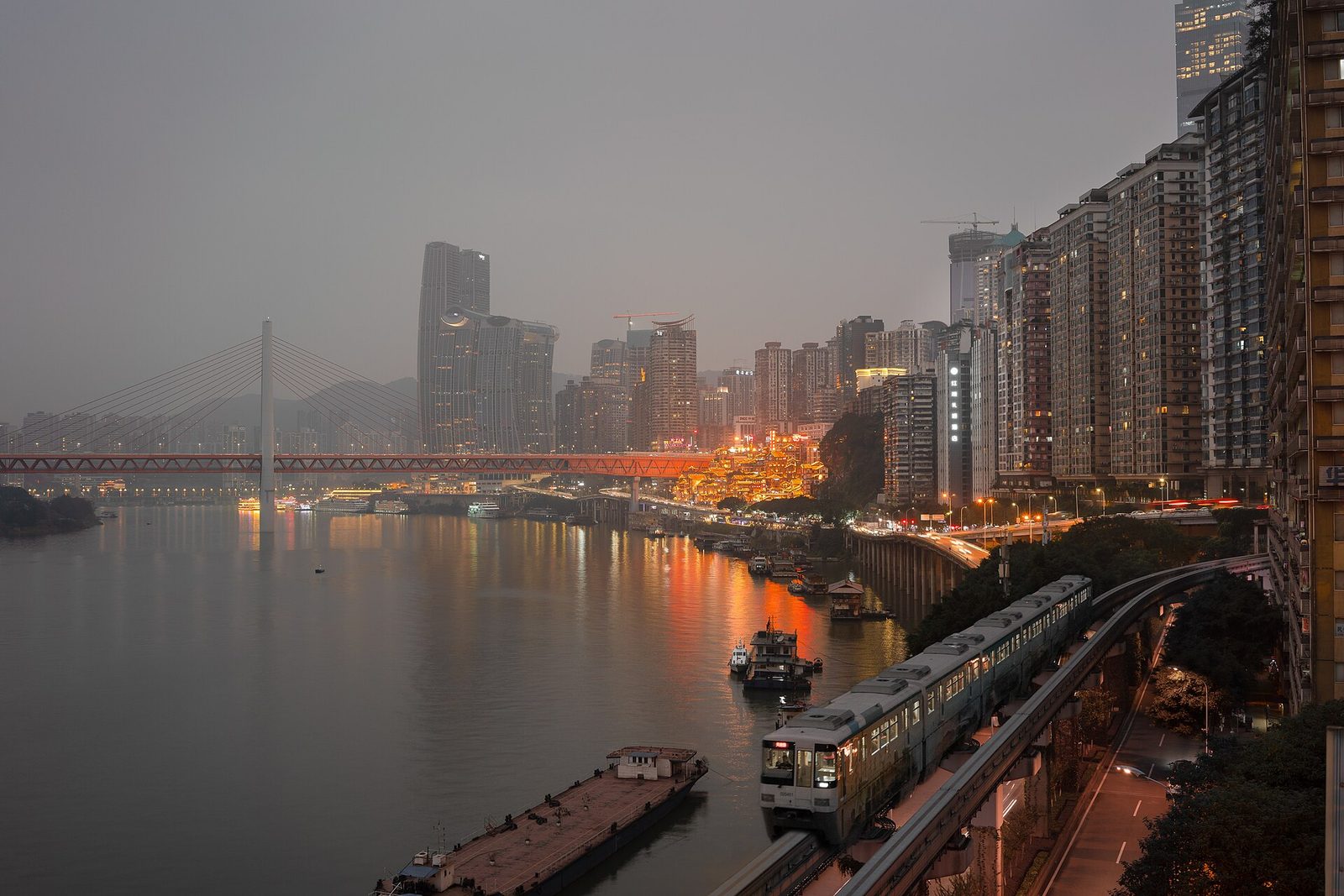
No other city in China breaks the concept of a “map” quite like Chongqing. Here, your navigation app says you are on the 11th floor, yet you step out the door straight onto the street; a light-rail train slices through the sixth floor of a residential block; from riverbank to hilltop, the same building can have eight basement levels and a rooftop plaza at once. This municipality of more than 31 million permanent residents is built on the mountains where the Yangtze and Jialing rivers meet — netizens call it an “8D magical city”, international travelers call it “the cyberpunk city”. Behind those labels stands a jianghu river-town with 3,000 years of urban history, wartime-capital years behind it, and roots in dockside culture.
Three Thousand Years of Jiangzhou: From Capital of the Ba Kingdom to “Double Celebration”
Chongqing's urban history traces back to 316 BC: after the State of Qin destroyed the Ba kingdom, the statesman Zhang Yi built the city of Jiangzhou on the peninsula between the two rivers — the founding of Chongqing. For the two thousand years that followed, it remained a military and commercial stronghold on the upper Yangtze, yet rarely the main character.
The turning point came under the Southern Song. In 1189, Emperor Guangzong of Song was first enfeoffed as Prince of Gong at Gongzhou and then promptly ascended the throne; hailing this “double celebration”, he promoted Gongzhou to Chongqing Prefecture — hence the name Chongqing, unchanged for more than eight hundred years.
Two chapters of modern history shaped its character deeply. After the port opened in 1891, Chongqing became the earliest trading port on the upper Yangtze opened to foreign commerce; foreign trading houses lined the river and modern industry and commerce took their first steps. The truly boiling years came during the War of Resistance: in 1937 the Nationalist government moved west and Chongqing became the wartime capital, as factories, schools, banks, and a million people moved up the river. Japanese forces subjected the city to more than five years of strategic bombing, and citizens carved air-raid shelters into the hills — many of the cliff-cave hotpot restaurants and tunnel bookshops you see today on the Yuzhong Peninsula are legacies of that era. After the government returned to Nanjing in 1946, Chongqing kept the foundations of a wartime capital: an industrial base, a relocated population, and a city temperament seasoned by storms.
The third turning point was direct administration by the central government in 1997. To serve the Three Gorges project, Chongqing was separated from Sichuan and became China's fourth — and youngest — province-level municipality, covering 82,400 square kilometers, the size of a mid-sized province, with the largest population of any Chinese city.
Mountains, Water, Fog, Bridges: Understanding the Vertical City
To read Chongqing, start with the terrain. The city's core, the Yuzhong Peninsula, is a ridge at the confluence of the Yangtze and the Jialing; no road lies flat or straight, so buildings simply follow the slopes. Out of this came Chongqing's own urban grammar: floors with no fixed orientation — in a single building, both the basement level and the roof can open onto the street; three-dimensional transit — the Yangtze River Cableway (completed in 1987, originally a commuter crossing for locals and now a living heritage relic), the Crown Grand Escalator (a single escalator that counts as a whole bus line), the Hongtudi metro station buried nearly 100 meters deep, and the navigation-breaking Huangjuewan Interchange — five stacked levels with 20 ramps.
Across its two rivers, Chongqing has built dozens of cross-river bridges, the highest density in China, earning it the name “Bridge Capital”. River mist combined with the mountain terrain produces roughly a hundred foggy days a year — the “Fog Capital” — and skyscrapers looming in and out of the fog are one source of that “cyberpunk” look.
Once you understand the terrain, you understand why “in Chongqing, opposite the 1st floor may be the 30th”. The train threading through the building at Liziba station (Line 2; the tower and the tracks were designed and built simultaneously) and the 11 stories of stilted houses (diaojiaolou) at Hongya Cave (clinging to a 75-meter cliff, with a street on every floor) are both the terrain pushed to its extreme.
A Culture Grown from the Docks: Hotpot, Dialect Quips, and Jianghu Spirit
The base layer of Chongqing's character is dock culture. Around the time the port opened, this was the hub of Chuanjiang (upper Yangtze) shipping, where boat trackers, boatmen, and porters crowded the banks. The most widely told story says hotpot was born on these docks: boatmen huddled around divided iron pots and boiled cheap beef tripe (maodu) and duck blood in heavy oil and chili to fight hunger and damp — the nine-square pot originally kept raw and cooked ingredients in separate grids, each diner minding their own square, and that format survives to this day.
Chongqing hotpot today still regards a beef-tallow base as the orthodox choice, in rivalry with Chengdu's rapeseed-oil broth; beef tripe (maodu), duck intestines, and yellow throat (huanghou, crunchy aorta) are the must-order trio, and the dipping sauce is nothing but sesame oil and minced garlic. Its street-level counterpart is Chongqing xiaomian (small noodles): portions start at two liang (about 100 g), dressed with a dozen-plus seasonings, and the heat can be dialed in with enough precision to add a notch between “mild” and “extra hot”. Jianghu cuisine is blunt and bold — laziji means hunting for chicken morsels in a mound of chilies, while Laifeng fish and Wanzhou grilled fish were born in roadside eateries, not banquet halls.
The language is just as fierce. Chongqing dialect belongs to Southwestern Mandarin: fast, sharp in tone, and born funny; locals call witty remarks yanzi — Chongqing dialect quips. The Paoge brotherhood, the mutual-aid sworn societies of the dock era, has long dissolved, but its loyalty-first, straight-talking way of doing things remains in the city's character.
Chongqing Today: Manufacturing Heavyweight and Top-Tier City Brand
Beyond the buzz, Chongqing has the largest economy of any city in western China and now ranks among the national top four. It is a major automobile manufacturing base for China and one of the world's few laptop manufacturing hubs — “Made in Chongqing” laptops once accounted for more than a third of global shipments. The metropolitan area spreads along the two rivers and their four banks, and even the Three Gorges reservoir area, 600 kilometers away, lies within its boundaries — in a sense, Chongqing is a “province-sized city”.
And in the internet's eyes, Chongqing is the most successful “city brand” of the past decade: travelers often liken the night view of Hongya Cave to scenes from Spirited Away (Miyazaki's team has never confirmed it, but the resemblance in spirit is unmistakable), while Better Days and Chongqing Hotpot carried its vertical streets to the world. For travelers, that is precisely the charm of Chongqing: the spectacle is not manufactured by scenic areas — it is the everyday life of thirty million people.
How to Feel the City
No checklist — just a few ways in: ride Line 2 the full length from Jiaochangkou to Yudong and watch the train weave between towers and riverbanks; at dusk, walk across Qiansimen Bridge and look back at the moment Hongya Cave lights up; slip into an air-raid-shelter hotpot restaurant, where heat and a sense of history rise together; then walk one of the Shancheng (Mountain City) trails (the Third Trail is the classic) and read the city's contour lines with your feet. Beyond the main city, two hours west lie the Dazu Rock Carvings (a UNESCO World Heritage Site and the peak of worldly Tang-and-Song grotto art), and to the southeast, the Three Natural Bridges of Wulong deliver a different kind of karst shock.
Two final notes: Chongqing takes its spice seriously — ordering “mild” is the kindest thing you can do for yourself; and walking here is all climbing slopes, so a good pair of shoes matters more than any guidebook.
Frequently asked questions
When is the best time to visit Chongqing?
March–May and October–November are the most comfortable. Chongqing summers are brutally hot (July–August often tops 40℃) — it is famously one of China's “furnace cities”. Winters are foggy, which makes the night views all the more atmospheric.
How many days should I spend in Chongqing?
Three to four days covers the vertical terrain of the historic Yuzhong core, the two-river night views, and Ciqikou; add the Dazu Rock Carvings or the Wulong karst and plan on five to six days. The city is built on mountains and walking is strenuous, so don't pack the itinerary too tight.