
"Chengdu: The Land of Abundance That Has Kept Its Name for 3,000 Years"
By PandaTrip Editorial · 7 min read · Verified 2026-09-06
Verified 2026-09-06

Among all of China's great cities, Chengdu is a singular case: roughly 2,300 years after its walls first went up in the Warring States period, its site has never moved and its name has never changed. The city owes its safety not to mountains or rivers, but to the shelter of a single water-conservancy project; for two thousand years it has lived at ease on a fertile plain, elevating "leisure" into a civic faith. Today it counts more than 21 million permanent residents — the largest city in western China — yet it still serves five-yuan bowls of gaiwan tea in People's Park, and on clear days the snow mountains of the west appear the moment you open a window.
From Jinsha to Jiaozi: Five Golden Ages of Chengdu
Ancient Shu. In 2001, construction work on Chengdu's western outskirts unearthed the Jinsha ruins — a capital of the ancient Shu kingdom dating back some 3,000 years. The Sun Bird gold foil found there (an openwork sheet just 0.02 cm thick, four birds circling the sun) is now the emblem of China's cultural heritage. The earlier Sanxingdui site (at Guanghan, north of Chengdu) belongs to the same lineage; the bronze-masked civilization of ancient Shu had its center right on the Chengdu Plain.
Dujiangyan and the Land of Abundance. Around 256 BCE, Li Bing, governor of the Qin commandery of Shu, directed the building of the Dujiangyan irrigation system — an engineered whole in which the Yuzui ("Fish Mouth") levee splits the Min River, the Feishayan spillway vents floodwater, and the Baopingkou channel draws the flow to the fields, turning the river's floods into gravity-fed irrigation. From then on the Chengdu Plain "commanded its own waters and droughts and knew no famine," and the name "Land of Abundance" was born. Dam-free, the system still runs today; it was inscribed as a World Cultural Heritage site in 2000.
Shu Han of the Three Kingdoms. In 221 CE Liu Bei proclaimed himself emperor here, and Chengdu served as the capital of Shu Han for more than forty years. The Wuhou Shrine is China's only temple where ruler and minister are venerated together (Liu Bei's Hui Mausoleum and Zhuge Liang's shrine share one compound) — the very place Du Fu meant when he wrote, "Where shall I seek the chancellor's shrine? Beyond the City of Brocade, where cypresses rise dark and dense."
The Tang and Song golden age. Tang-era Chengdu was hailed as "Yang first, Yi second" — second in prosperity only to Yangzhou. In 759, fleeing the An Lushan Rebellion, Du Fu brought his family into Shu and lived nearly four years in a thatched cottage by Huanhua Stream, writing more than 240 poems. Under the Northern Song, sixteen wealthy Chengdu merchants jointly issued letters of credit, and the government soon set up the Jiaozi Office of Yizhou — the official jiaozi issued in 1023 was the world's first government paper money, predating Europe's by more than six hundred years.
The "Huguang fills Sichuan" migration and the modern era. The wars spanning the late Ming and early Qing slashed Sichuan's population, and the "Huguang fills Sichuan" migration remade Chengdu's people and its food — much of the base flavor of today's Sichuan cuisine is a product of that immigrant melting pot. By around 1905 Chengdu's modern schools and newspapers were leading the country; during the War of Resistance against Japan, the Chengdu Plain again became the nation's rear base.
Geography: A Plain-Dwelling City Beneath Snow Mountains
Chengdu is a rare big city built on "pure plain" — the spread of the Chengdu Plain was laid down by alluvial deposits of the Min River, hemmed in by the Longmen Mountains on the west and the Longquan Mountains on the east. The city's ease of living is, at its root, a gift of geography: no flood peril (Dujiangyan tamed the river), no extremes of bitter cold or scorching heat, and farmland irrigated by gravity alone.
In modern times that geography has handed Chengdu a new identity: a park city beneath the snow mountains. The urban core sits at roughly 500 meters above sea level, and less than 100 kilometers due west, as the crow flies, the snow peaks of the western Sichuan plateau begin. On a fine morning, looking west from a high-rise downtown, the band of 6,000-meter peaks (Yaomei Feng among them) stands out clearly. A metropolis of twenty million where you can "open a window onto snow mountains" is something the world can count on the fingers of one hand.
Cultural Foundations: Teahouses, Sichuan Opera, and Mahjong
The keyword of Chengdu culture is "slow" — but this slowness is not laziness; it is a complete system of living. The teahouse is that system's parlor: old Chengdu's teahouses doubled as club, marketplace, mediation chamber, and lounge, and the tradition of spending a whole afternoon over a single bowl of gaiwan tea continues today. Heming Teahouse in People's Park has been pouring for a century — bamboo chairs, low tables, long-spouted copper kettles, and the craft of the ear-cleaning masters compose the most classic of Chengdu scenes. Sichuan opera crystallized in the Qing dynasty as a "concert of five vocal styles"; face-changing (bianlian) and fire-spitting are its most famous stunts, though the literary merit of its serious repertoire is often underestimated. Mahjong is the universal social currency — in teahouses, in parks, at riverside tea stalls, its clatter is the city's white noise.
Worthy of a paragraph of its own are Shu brocade and Shu embroidery: in the Han dynasty, Chengdu appointed a jinguan ("brocade official") to administer its weaving; the Jin River ("Brocade River") took its name from the rinsing of finished silk; and the "City of Brocade" became Chengdu's enduring byname.
Local Flavors: Yi Cai Yi Ge, Bai Cai Bai Wei — "One Dish, One Style; A Hundred Dishes, A Hundred Flavors"
Sichuan cuisine is China's most beloved and most misunderstood culinary tradition — it does not equal spicy. Its essence lies in "seasoning": Pixian broad-bean paste, Baoning vinegar, Hanyuan Sichuan pepper, Yibin yaicai (salted mustard greens). Among its twenty-four flavor profiles, yuxiang ("fish-fragrant"), guaiwei ("strange flavor"), jiaoma (Sichuan-pepper numbing), and hula (scorched chili) do not define themselves by heat. A supreme clear-broth dish like kaishui baicai ("cabbage in boiling water") is precisely the other face of the Sichuan kitchen's craft.
Everyday Chengdu belongs to small eats: dandan noodles, Zhong dumplings (zhong shuijiao), Long wontons (long chaoshou), dan honggao (griddled egg cakes), tangyou guozi (syrup-fried rice balls), plus late-night lengdanbei stalls (cold bites and cold beer) and skewers (chuanchuan). Chengdu-style hotpot takes the rapeseed-oil route — fragrant and gently spicy — a playful counterpoint to Chongqing's beef-tallow pots, heavy on both má and là. To grasp Chengdu's food philosophy, one visit to a morning wet market beats ten internet-famous restaurants.
And then, of course, the giant panda. Established in 1987, the Chengdu Research Base of Giant Panda Breeding began by rescuing sick and starving wild pandas and is today the world's most important center for panda science and panda-watching. "City of Pandas" is Chengdu's least controversial international calling card.
Chengdu Today: From Capital of Leisure to City of Events
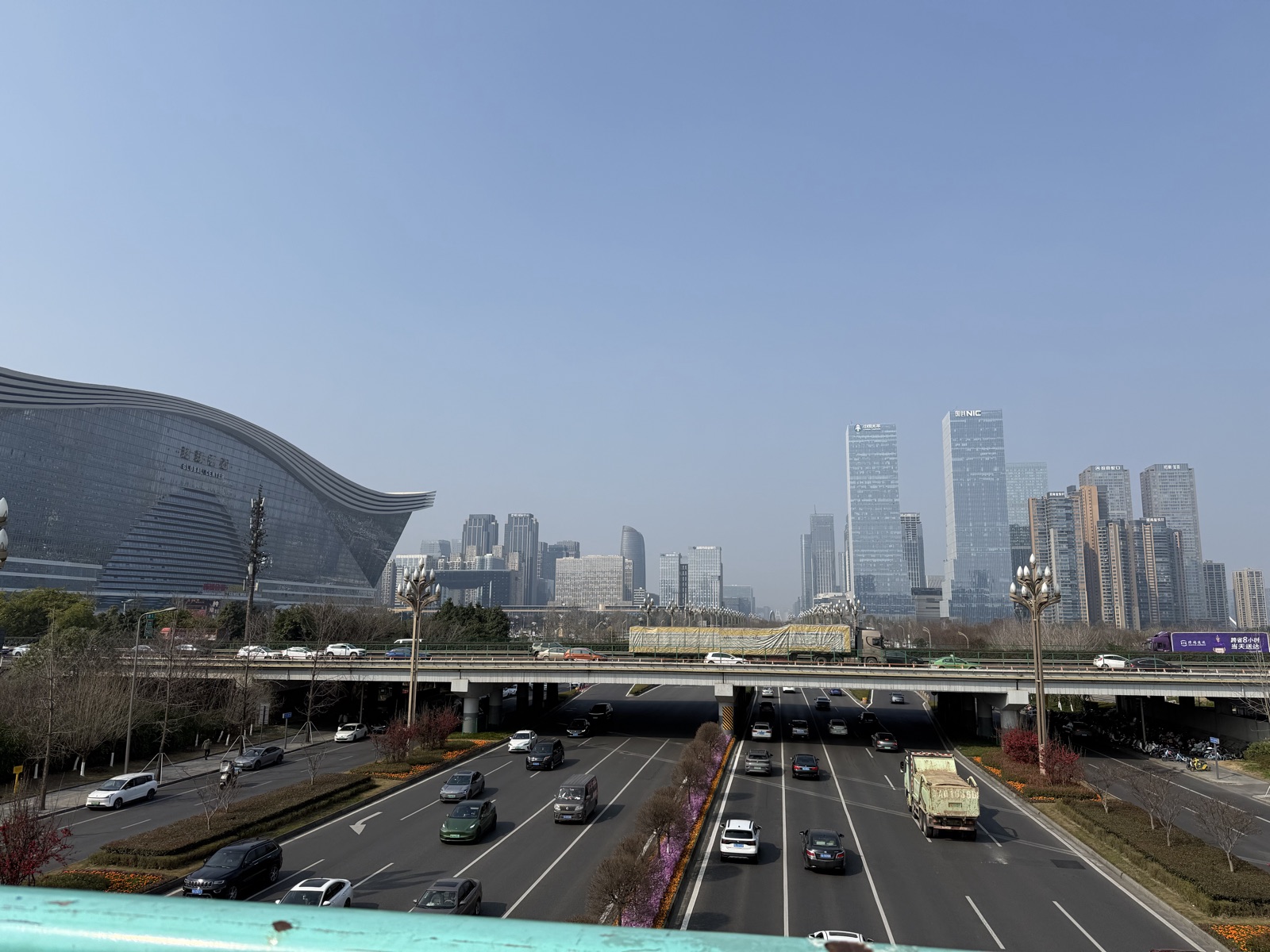
Today's Chengdu is the economic and consumer heart of western China, with electronic information, automobiles, and biopharmaceuticals as pillar industries, and a density of gaming and animation companies that leads the country. More striking still is its string of recent international events: the 31st FISU World University Games (Summer Universiade) in 2023, then the 12th World Games in 2025 — the first ever hosted by mainland China. A city famed for "slow living" that doubles as China's busiest "city of events": that contrast, in itself, is Chengdu.
For foreign travelers Chengdu carries an extra meaning: it is the gateway to western Sichuan (Jiuzhaigou, Daocheng Yading, the road toward Tibet) and to panda habitat (Dujiangyan, Wolong). Kuanzhai Alleys and Taikoo Li put the "layering of old and new" on display, but the real Chengdu hides in the little bars of Yulin Road, in Heming Teahouse in People's Park, and in the lengdanbei stalls at two in the morning.
How to Feel the City
Spend an early morning in People's Park with a bowl of gaiwan tea and a session with an ear-cleaning master; get into the Panda Base early to watch the cubs tumble; pass the afternoon at the Du Fu Thatched Cottage, reading a few lines of "My Thatched Hut Wrecked by the Autumn Wind" in the bamboo grove; at dusk, eat at a neighborhood joint in Yulin or on Dengpa Street, then slip into a little bar afterward. If you can spare one more day, ride the intercity rail half an hour to Dujiangyan and stand on the Fish Mouth levee to watch a waterworks that has been running for more than two thousand years — the source of all of Chengdu's ease is right there.
Frequently asked questions
When is the best time to visit Chengdu?
March–June and September–November are the most comfortable. Summers are muggy and rainy; winters are gray and chilly, but not truly cold. To catch the sunrise gilding the peaks of Xiling Snow Mountain, clear autumn and winter mornings offer the best odds.
How should I plan a visit to the panda base?
The Chengdu Research Base of Giant Panda Breeding sits in the city's northeast and is reachable by Metro Line 3. Pandas are most active in the morning — aim to enter at opening time (7:30–8:00) and head straight to the cub enclosures; by afternoon, most of them are asleep.