
"Shenzhen: From Fishing Village to Tech Capital in Forty-Five Years"
By PandaTrip Editorial · 6 min read · Verified 2026-09-06
Verified 2026-09-06

Among all of China's major cities, Shenzhen is the only one with no past — not because its history was erased, but because before 1979 it simply was not a city. That year, Bao'an County was dissolved and re-established as the city of Shenzhen; the year after, the National People's Congress approved the creation of the Shenzhen Special Economic Zone (SEZ), turning 327.5 square kilometers of land just across the water from Hong Kong into the first testing ground of China's opening up. Forty-five years on, nearly 20 million people live here permanently, GDP ranks third among Chinese cities, and the city is home to Tencent, Huawei, DJI and BYD — a cluster of the most important names in global consumer technology.
The "Shenzhen Speed": A Parable of Reform and Opening-Up
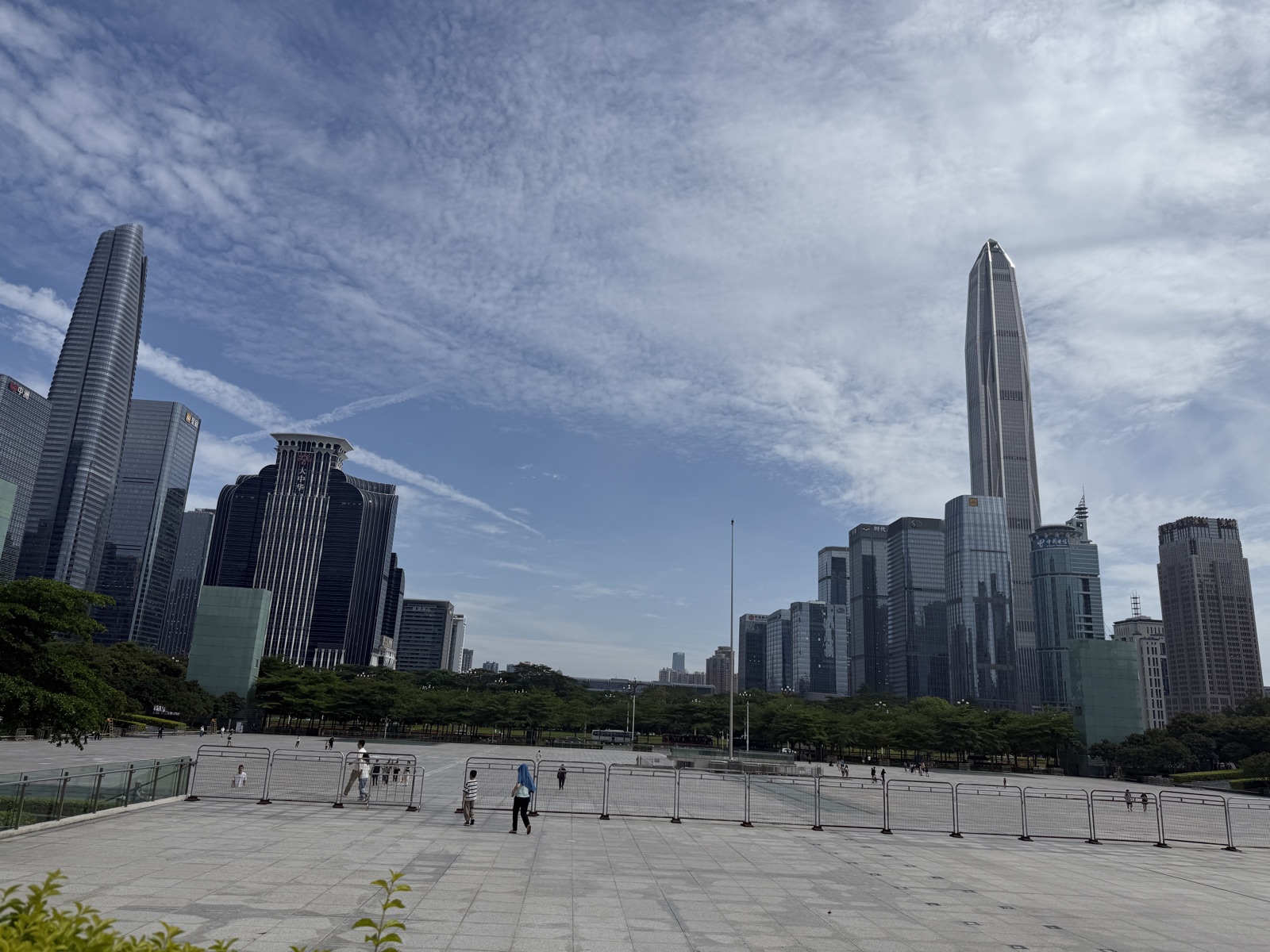
Shenzhen's early story comes down to one phrase: the "Shenzhen speed". In 1984, the International Trade Center (Guomao) set a construction record of "a floor every three days", and the phrase has been shorthand for Chinese efficiency ever since. The slogan of the Shekou Industrial Zone — "Time is money, efficiency is life" — struck early-1980s China like a thunderclap.
Nearly every generation here has produced a phenomenon-grade corporate story: Huawei began in 1987 reselling telephone switches; Foxconn broke ground on its Longhua campus in 1988; Tencent was born in 1998 in an office near Huaqiangbei (Shenzhen's electronics district) — its OICQ was later renamed QQ; in 2006 Wang Tao, a graduate of HKUST, founded DJI in an ordinary residential building; and then came BYD in the new-energy era. Huaqiangbei — "China's No. 1 electronics street" — is a living specimen for understanding Shenzhen: countless billionaires emerged from one-meter market counters, any electronic component can be sourced here, and "shanzhai" (copycat) culture completed its evolution into "micro-innovation" and then into real brands.
Demographics are another key to understanding the city: the average age has hovered just past thirty for years, and almost everyone here is a migrant. "Once you're here, you're a Shenzhener" is not just a slogan — Mandarin is the absolute lingua franca, Hunan, Sichuan, Chaoshan and Northeastern cuisines sit as equals, and there is no native clique to assimilate into. This rootlessness breeds pragmatism and an unhesitating embrace of the new: mobile payments, drone-delivered takeout, driverless taxis — most of them landed here first.
Urban Form: A Linear City and Its Urban Villages
Shenzhen unfolds east–west between mountains and sea in a "cluster" layout rare in the history of urban planning — Luohu (the earliest port-of-entry business district), Futian (the administrative and financial center), Nanshan (the new center of tech and culture, whose Yuehai subdistrict is famous for its density of tech companies), Bao'an and Longgang each operate relatively independently. In 2004 Shenzhen became China's first city with no rural administrative units, yet another form survived: urban villages (chengzhongcun) — indigenous villages wrapped inside urbanization, dense with "handshake buildings" and cheap rents, the first stop for millions of newcomers. The redevelopment controversies over Dachong and Baishizhou and the regeneration experiment of Nantou Ancient Town are among the best live case studies of Chinese urbanization.
Nature is Shenzhen's underrated side: half mountains and sea, half city. Jiaochangwei and the Dongchong–Xichong crossing on the Dapeng Peninsula are outdoor lovers' best-kept secrets; the 15-kilometer waterfront boardwalk of Shenzhen Bay Park strings together scenes of migratory birds and office towers in a single frame — black-faced spoonbills wintering right across from a tech park is magical realism that belongs to Shenzhen alone.
Culture: From "Cultural Desert" to City of Design
Shenzhen was once mocked as a "cultural desert", and its reply was quintessentially Shenzhen: build it. The "Library City" program has pushed the number of public libraries citywide (including self-service ones) past one thousand; design is the city's official calling card — in 2008 UNESCO designated Shenzhen a "City of Design", and its density of graphic design, industrial design and architectural experimentation leads the country (the Shenzhen–Hong Kong Bi-city Biennale of Architecture and Urbanism and the OCT-LOFT creative park are where to see it). Dafen Oil Painting Village is the world's largest base for oil-painting reproduction and export; its recent turn toward original work makes it a living textbook of the global art industry chain.
Science venues are another card: Shenzhen Museum; the Museum of Contemporary Art and Urban Planning (a twin building involving deconstructivist architect Rem Koolhaas that is itself an exhibit); and the new Shenzhen Science and Technology Museum, opened in 2023. OCT's theme-park cluster (Splendid China, Window of the World) is a leftover of the "miniature landscape" era of the late 1980s — seen today, it offers an oddly fascinating slice of that time.
Eating in Shenzhen: A United Nations of Regional Flavors
Shenzhen has no traditional cuisine of its own, which has become its strength — the flavors of the whole country are served here to their home-region standards: Chaoshan beef hotpot and braised goose (Chaoshan people make up a remarkably large share of Shenzhen's population), Hunan stir-fried pork with chili, Sichuan–Chongqing hotpot, Northeastern barbecue, Hakka dishes, Zhanjiang oysters... Add the two parallel worlds of urban-village prices and refined business-district dining, and everything from a 20-yuan meal to Michelin-level restaurants sits within walking distance. Breakfast can be Cantonese morning tea, "one pot, two dim sum" (yum cha), and your midnight snack can come from any province's late-night school: this city's stomach is federal.
How to Feel the City
In the morning, browse the electronics markets of Huaqiangbei and soak up the cyber air of a forest of components (worth seeing even if you buy nothing); at noon, drift between the cafes and the factory-turned-galleries of the OCT-LOFT creative park; in the afternoon, climb Lianhua Hill for the Deng Xiaoping statue and the Civic Center axis, or duck into the Museum of Contemporary Art and Urban Planning for an exhibition; at dusk, walk the coastline of Shenzhen Bay Park until sunset, with Hong Kong's hills just across the water; at night, head back to an urban village (around pre-redevelopment Baishizhou, or the Shuiwei 1368 Cultural Block) for a late-night meal. If you have a second day, the sea of the Dapeng Peninsula or the mists of Wutong Mountain will show you the other side of this "city of technology" — half of it, in fact, is mountains and sea.
Shenzhen may not give you the weight of history, but it offers something rare: the chance to see with your own eyes how "modern China" was built, layer by layer, over forty-five years. In the history of the world's cities, that is a singular case.
Frequently asked questions
When is the best time to visit Shenzhen?
October through April is dry and comfortable — the best season. May to September is hot, humid and typhoon-prone. Shenzhen's indoor attractions (science museums, art museums, shopping malls) can be enjoyed year-round, and the beach season runs from May to October.
Can Shenzhen and Hong Kong be combined in one trip?
Yes, but you must meet each side's entry rules separately — the mainland side follows China's visa and visa-free policies, while entering Hong Kong requires a separate Hong Kong visa or eligibility for its visa-free arrangements (most nationalities must apply in advance). High-speed trains from Shenzhen North or Futian station reach Hong Kong West Kowloon in 14 minutes, so with the right documents you can cross whenever you like.