
Hangzhou: West Lake, Liangzhu, and a Digital City
By PandaTrip Editorial · 6 min read · Verified 2026-09-06
Verified 2026-09-06
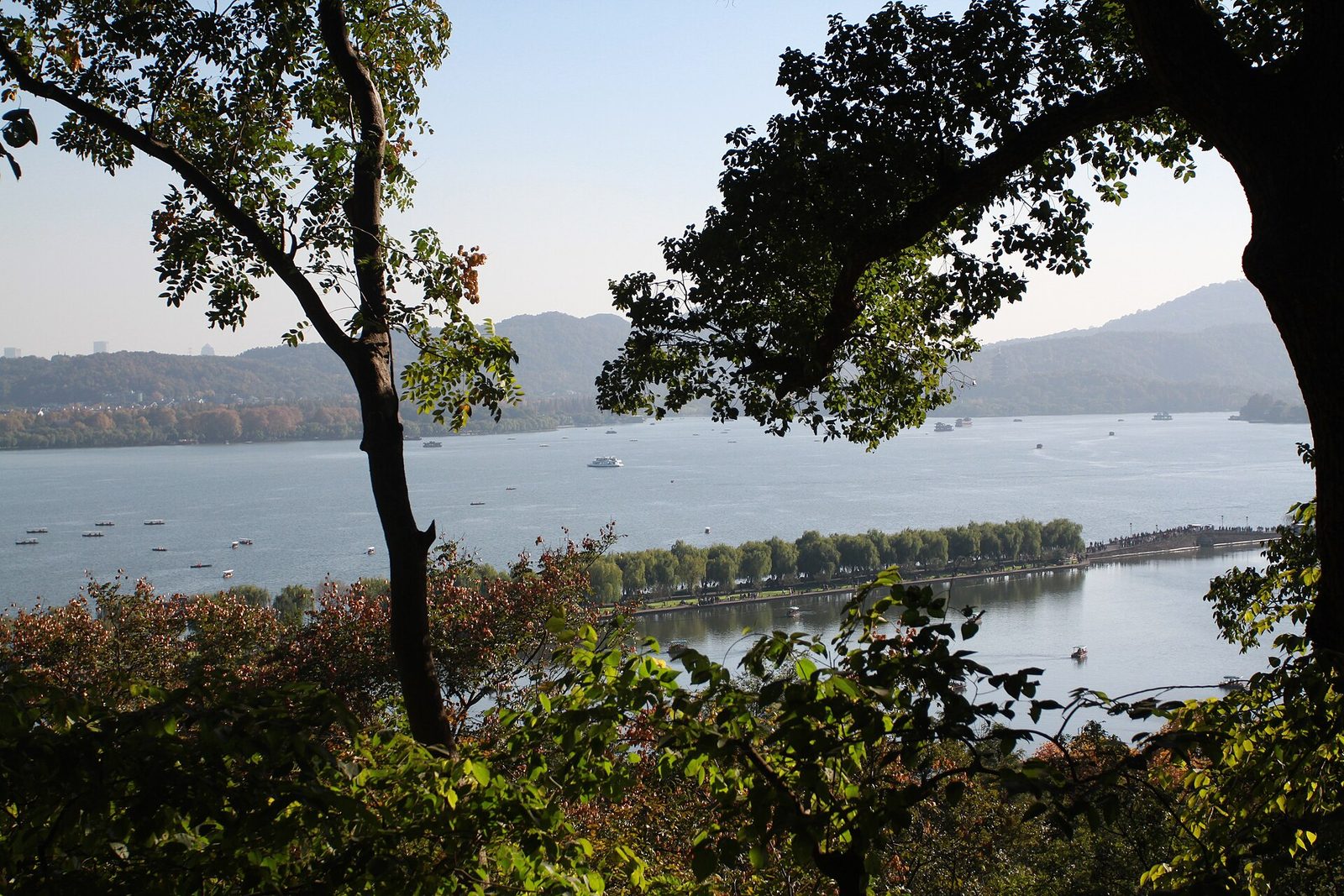
In his travelogue, Marco Polo called Hangzhou (then known as Xingzai, that is, Lin'an of the Southern Song) “the most beautiful and magnificent city in the world.” More than seven hundred years later, the city still lives up to half of that praise — the beauty of its lake and hills — while the other half has gone entirely beyond his imagination: this is where China's digital economy began. What makes Hangzhou unique is that the two identities coexist without the least friction: the old men drinking tea by West Lake and the hosts selling live from their streaming rooms share the same stretch of lake and mountain.
Where the Five Thousand Years Begin: Liangzhu
Many people assume Hangzhou's story starts with the Southern Song; in fact, the depth of its civilization is enough to overturn what you think you know. In 2019, the ruins of the Liangzhu Ancient City were inscribed on the World Heritage List — this city and water-management system, dating back 5,300 to 4,300 years, proves that the five thousand years of Chinese civilization are no legend: a vast walled city site, sophisticated dam engineering, and an exquisite system of jade cong tubes and bi discs together constitute the complete evidence of a mature early state. International scholarship has accordingly come to accept that “five thousand years of Chinese civilization” are counted from Liangzhu. The Liangzhu Museum and the ruins park, in Hangzhou's northwestern outskirts, are the city's weightiest cultural assets.
Hangzhou's direct predecessor was the city of Hangzhou that rose after the Jiangnan Canal was cut through in the Sui dynasty (a prefecture was established there in the Kaihuang years). When the Tang poet Bai Juyi served as prefect he left behind the legend of the Bai Causeway (today's Bai Causeway was actually built in later ages, but Hangzhou people insist on naming it after him). In the Five Dynasties and Ten Kingdoms period, the Wuyue Kingdom made Hangzhou its capital, and much of the pagoda skyline — Baochu Pagoda, Six Harmonies Pagoda, Leifeng Pagoda — was founded in that era: a Buddhist-revering “Buddhist kingdom of the southeast.”
Southern Song Lin'an: The Summit of Urban Life in Ancient China
After the Jingkang Incident of 1127, the Song court crossed south, and in 1138 it formally established its capital at Lin'an (Hangzhou). For the century and a half that followed, Hangzhou was the most flourishing city in the world, with a population of more than a million. The Lin'an life recorded in the Mengliang Lu and the Wulin Jiushi — variety shows in the washe entertainment quarters and goulan theaters, the refinements of wine houses and teahouses, night markets running past the third watch, guilds of four hundred and forty trades — is the high-water specimen of urban civilization in ancient China. It was in this period that the proverb “Above is heaven; below are Suzhou and Hangzhou” took its settled form.
The other legacy the Southern Song left Hangzhou is West Lake, both its name and its shape: Su Dongpo served twice in Hangzhou (dredging the lake and building the Su Causeway in the 1070s), and together with Bai Juyi and Yang Wanli, these poet-prefects kept turning hydraulic works into objects of beauty. The inscribed-title system of the Ten Scenes of West Lake (Spring Dawn at Su Causeway, Lingering Snow on Broken Bridge, Leifeng Pagoda in Evening Glow...) took shape in the Southern Song — in 2011, the “West Lake Cultural Landscape of Hangzhou” was inscribed as a World Heritage site in its entirety, precisely for being a “joint work of man and nature”: a lake-and-hill landscape written and rewritten by poetry and painting over a thousand years, and in turn continuously shaped by them.
The Jiangnan Base Tone: Silk, Tea, and the Canal
Hangzhou's traditional economy stood on three pillars. Silk: fragments of silk textiles have already been unearthed at the Liangzhu site; from the damasks and gauzes of Tang-era Hangzhou and the Jiangnan imperial silk manufactories of the Qing, the thread runs to today, with the China National Silk Museum settled in Hangzhou. Tea: West Lake Longjing tea ranks among China's ten most famous teas; the core growing areas of its five classic marks — “Shi, Long, Yun, Hu, Mei” (Lion, Dragon, Cloud, Tiger, Plum) — lie in the hills west of the lake, and the pre-Qingming mingqian pluck comes but once a year; the tea farmers' life of Longjing Village and Meijiawu is an everyday world you can walk into. The canal: the southern terminus of the Beijing–Hangzhou Grand Canal is at Gongchen Bridge in Hangzhou; in 2014 the Grand Canal was inscribed as a World Heritage site as a whole, and the cluster of knife, scissors, sword, umbrella, and fan museums in the Qiaoxi Historic Block tells of the craft-industry prosperity the canal brought.
Food is another Jiangnan language: Hangzhou cuisine is light and fresh — West Lake fish in vinegar (the most argued-over of its famous dishes, and only a handful of restaurants cook it well), Longjing shrimp, Dongpo pork, pian'erchuan noodles, mao'erduo “cat's ears,” and dingsheng cake; a breakfast bowl of shrimp-and-eel noodles, or tossed noodles with a seaweed soup, is the locals' start-up ritual. In autumn, the osmanthus fragrance that fills the city, along with osmanthus lotus root and osmanthus Longjing, is Hangzhou's seasonal limited edition.
A Digital City: From the West Lake Era to the Qiantang River Era
In 1999, Jack Ma founded Alibaba in an apartment at Lakeside Garden, and over the twenty years that followed, Hangzhou grew a complete internet ecosystem: e-commerce, payments (Alipay was born here), cloud computing, and livestream commerce. Today's Hangzhou is China's “No. 1 city of the digital economy” — its mobile-payment coverage and the digitization of its government services are national benchmarks, and the 19th Asian Games in 2023 (with the closing ceremony scene of the “digital torchbearer” extinguishing the flame together with a real person) was a full-dress demonstration of the city's digital capability. The urban frame has stepped from the “West Lake era” into the “Qiantang River era”: the City Balcony of Qianjiang New City and the “Big and Small Lotus” of the Olympic Sports Center form the new skyline.
For travelers, Hangzhou's digital genes mean the smoothest local experience — QR-code boarding on buses and metro, scenic-area reservations, and shared bikes exist here at the level of infrastructure (for practical guidance, see “How to Pay in China” and “China Metro Guide”).
How to Feel the City
Set out at dawn from the Broken Bridge and walk or cycle the half circle of the lake along Bai Causeway — Solitary Hill — Su Causeway, enjoying the lake and hills to yourself before the tour groups arrive; in the morning, head to Lingyin Temple and Feilai Feng (for the Five Dynasties, Song, and Yuan grotto sculptures, rare in Jiangnan), stopping off in the Longjing tea hills for a cup of freshly pan-fired mingqian tea; for the afternoon, choose one of two lines: the Xiangshan campus of the China Academy of Art and the Liangzhu Museum (design and civilization), or the Gongchen Bridge canal quarter (Jiangnan street life); return to the lakeside at dusk for a performance of “Enduring Memories of Hangzhou,” the Impression West Lake show, or simply wait on a bench for the musical fountains and the lighting-up of Leifeng Pagoda. The spring tea season and the osmanthus-rain autumn of Manlong are the city's two Easter eggs for time travelers.
Hangzhou's charm, in the end, comes down to a single sentence: it lays five thousand years (Liangzhu), one thousand years (West Lake), and twenty years (the digital city) onto one shanshui landscape painting — and none of them gets in the others' way.
Frequently asked questions
When is the best time to visit Hangzhou?
March–May (Spring Dawn at Su Causeway, fresh Longjing tea) and September–November (osmanthus season and the “osmanthus rain” of Manlong) are best. Summer is muggy, but the lotus of Lotus in the Breeze at Crooked Courtyard is a limited-season show. On public holidays the West Lake area imposes traffic restrictions and gets crowded — avoid the peaks if you can.
How many days should I spend in Hangzhou?
Two to three days: one full day for West Lake (walking or cycling the lake plus a boat ride), half a day for Lingyin Temple and the Longjing tea hills, and half a day for the Grand Canal or the Liangzhu Ancient City ruins. Add another two to three days if you want nearby Qiandao Lake, Wuzhen, or Shaoxing.