
China Quick Reference — Voltage and Outlets, Tap Water, Tipping, Toilets, and Emergency Numbers
By PandaTrip Editorial · 4 min read · Verified 2026-09-06
Verified 2026-09-06
Every country has a batch of small facts that no guide bothers to write up, yet you'll bump into them on day one after landing. This article rounds up China's quick-reference essentials — five minutes before departure is all it takes.
Electricity: 220V, Two Types of Outlets
China runs on 220V / 50Hz, with two types of outlets:
- Two flat pins (Type A — much like the US plug, but without holes) — the most common; most phone chargers plug straight in;
- Three angled pins (Type I — the same as the Australian standard) — common in hotels.
Some hotels also have European round-pin sockets, but that's not guaranteed. Bring a universal travel adapter; if you carry a lot of devices, add a small power strip. One caution for 100V—120V appliances (older hair dryers, curling irons): plugging them straight into 220V will burn them out. Modern electronics labeled "100-240V" (phone, laptop, and camera chargers) work as is.
Water: Don't Drink Straight from the Tap
Tap water in mainland China is not recommended for drinking straight; once boiled, it's fine. An electric kettle is standard in hotel rooms. Bottled water sells for ¥2—3 at convenience stores, and the tea served in restaurants is safe to drink. If you have a sensitive stomach, brushing your teeth with bottled water is a sensible precaution.
Tipping: Not Part of the Culture
China has no tipping culture — nothing is expected at restaurants, in taxis, or at barbershops. If an upscale restaurant charges a 10%—15% service fee, it will be printed directly on the bill. Giving a bellhop ¥5—10 after help with luggage is fine; not giving anything is perfectly normal too.
Toilets: Mostly Squat Style, Bring Your Own Paper
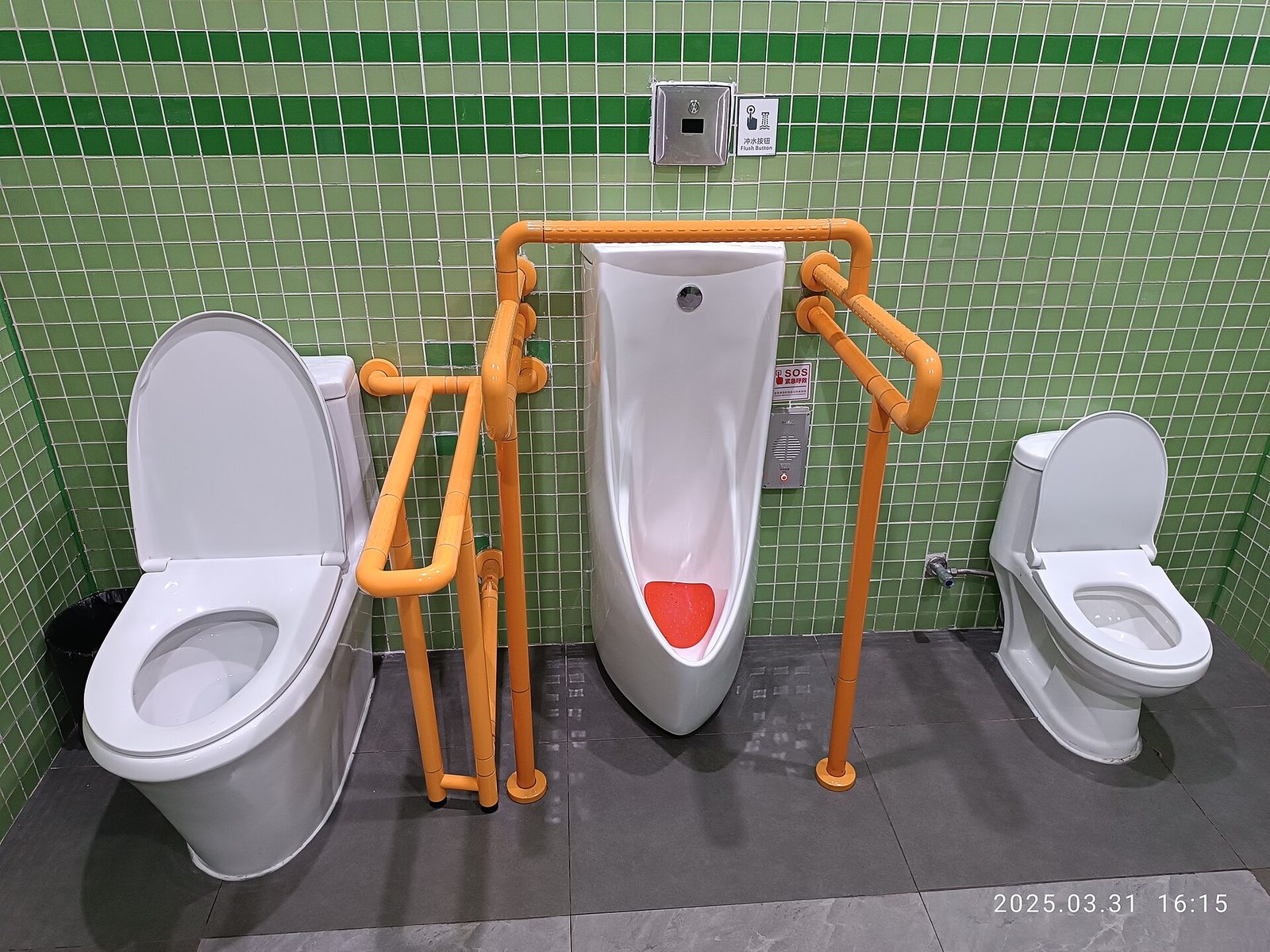
After the "toilet revolution," China's public restrooms have improved enormously in number and cleanliness, but the squat toilet still dominates. The essentials:
- Public restrooms are basically free, and you'll find them in malls, metro stations, tourist sites, and parks;
- Bring your own tissue — most restrooms don't provide it, or sell it only at the entrance;
- Malls and upscale restaurants generally have sit-down toilets with paper; McDonald's and Starbucks are reliable fallbacks;
- Traveling with children: large malls usually have a "third restroom" (accessible/family restroom).
Smoking and Public Order
Smoking is banned by law in indoor public places (restaurants, malls, high-speed trains, airports). Beijing, Shanghai, and other cities impose fines (from a few tens of yuan up to ¥200), and enforcement varies from place to place — smoking on a high-speed train gets you actually punished and can put you on a no-ride list, so don't try it. Smokers usually gather by restaurant entrances and in outdoor smoking areas.
A few other rules that are easy to miss: obey the pedestrian signals (some cities fine jaywalkers caught on camera), no eating in metro cars, and playing audio from your phone out loud in public will draw stares.
Internet, Time Zone, and Connectivity
- The whole country runs on a single time zone: Beijing time (UTC+8). Daily life in Xinjiang actually runs about two hours later than in the east, but the clocks read the same;
- Mobile coverage is superb — signal along high-speed rail lines and in remote mountain villages is the norm;
- Wi-Fi is everywhere in hotels, restaurants, and malls — but whether foreign internet services work inside the country is another matter; see Which Apps Work in China.
Emergency Numbers and Getting Help
| Number | Use |
|---|---|
| 110 | Police (public safety, disputes, assistance) |
| 120 | Medical emergency |
| 119 | Fire and rescue |
| 122 | Traffic accidents |
| 12110 | Police text line (when you can't make a voice call) |
| 12345 | Government services hotline (complaints, inquiries; English available in some cities) |
China's cities are on the whole friendly and safe for travelers, and late-night street dining is a local routine. If a real emergency strikes: dial 110 first, then alert the hotel front desk — the desk can help translate, come along, and handle most matters. For the full picture on medical care (international departments, pharmacies, insurance), see What to Do If You Get Sick in China.
Three Small Things
- Medicine is easy to buy: pharmacies are everywhere, and over-the-counter drugs need no prescription (see the medical care guide);
- Carry a pen: some registration forms still have to be filled in by hand;
- Four useful phrases: nǐ hǎo 你好 (hello), xiè xie 谢谢 (thanks), duō shao qián 多少钱 (how much?), tài là le 太辣了 (too spicy) — with a smile, they'll carry you through most everyday situations.
Frequently asked questions
Should I tip in China?
No — tipping isn't the custom. Nobody tips at restaurants, in taxis, or at hotels; an upscale restaurant may add a 10%—15% service charge, and that will be printed on the bill. If you do leave a tip, the staff will most likely chase after you to return it.
What numbers do I call in an emergency?
Police 110, medical emergency 120, fire 119, traffic accident 122; if a call won't go through or you can't explain your location, the hotel front desk is the most effective place to seek help. Foreign travelers who need consular assistance should contact their own country's embassy or consulate in China.