
Shared Bikes in China: The Complete Scan-to-Ride Guide (Hello/Meituan/Qingju, Post-2026 Price Adjustment)
By PandaTrip Editorial · 4 min read · Verified 2026-09-06
Verified 2026-09-06

Riding shared bikes through China's cities — weaving through the hutong, cruising along the river, looping a lake — is one of the best-value experiences a traveler can have: more flexible than the metro, less tiring than walking, and under US$3 an hour. For locals, the whole operation requires no thought at all; for passport-holding travelers, the difficulty comes down to a single step: "how to scan and unlock." Conclusion first: riding Hello bikes through Alipay is the smoothest path.
Know the bikes first: three colors
- Hello (blue and white): the best fit — ride directly inside Alipay.
- Meituan (yellow): requires the Meituan app and real-name registration; passports go through manual review, which can take anywhere from a few hours to several days.
- Qingju (green/cyan, owned by DiDi): used inside the DiDi app; for the sign-up process, see our "Ride-Hailing in China" guide.
The bikes themselves are broadly similar across the three operators, and prices move in lockstep — since the July 2026 adjustment, the starting fare is about 1.99元 including 60 minutes. There are small variations by city and between weekdays and weekends; the scan screen shows the exact pricing rules for each ride.
Recommended flow: scan and ride Hello via Alipay
Prerequisite: the international version of Alipay installed, your identity verified with your passport, and an international bank card linked.
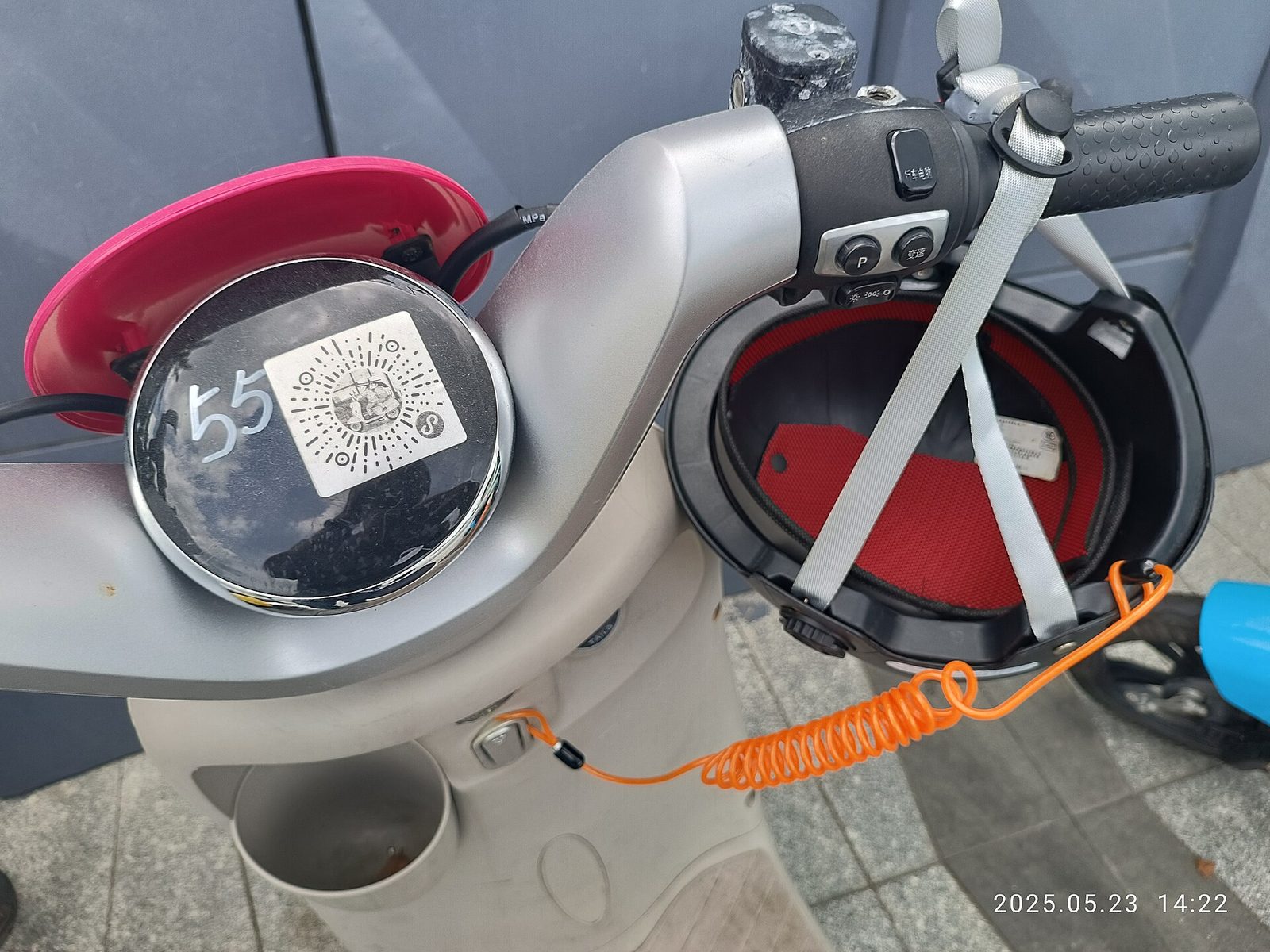
- On the Alipay home screen, tap "Scan" and point it at the QR code on the bike's frame (on the handlebar or the fender);
- On first use, the Hello bike mini-program pops up — authorize Zhima Credit (Sesame Credit) to ride deposit-free;
- The lock pops open automatically and billing begins;
- At your destination, manually press the lock on the rear wheel inside a parking zone (a white-lined parking bay or within the electronic geo-fence);
- The mini-program settles the fare automatically; the trip ends.
No extra app downloads and no Chinese phone number required. Official English guides in Shanghai, Xi'an, and other cities recommend this same route.
Rules of the road: don't turn a cheap ride into a fine
- Stay in the bike lane. Chinese cities draw sharp lines between motor lanes, bike lanes, and sidewalks, and the e-bikes sharing the bike lane with you are not slow — keep right and never ride against traffic. Getting stopped and fined by traffic police for riding the wrong way is a very real possibility.
- Park inside the geo-fence. Service areas are bounded by GPS; parking in the wrong area incurs a dispatch fee (usually 5—20元), and if you ride out of the service area you may be unable to lock the bike while billing continues. Before parking, glance at the P markers on the app's map.
- Obey the traffic signals. Intersection camera enforcement applies to bicycles too; right-turning vehicles in China do not yield to cyclists going straight, so check both directions when crossing.
- Dismount and walk on crowded sidewalks. Riding into a busy pedestrian area is a traffic violation — and genuinely dangerous.
Alternatives for longer distances
Shared bikes are ordinary city bicycles, not built for mountains or long hauls. Scenic greenways (West Lake in Hangzhou, Chengdu's Ring Ecological Area, Xiamen's Island Ring Road) offer the best cycling experience; for long rides, renting a proper bicycle or e-bike at the entrance to the scenic area is the more practical choice.
Shared e-bikes (both Hello and Qingju offer electric models) are available in some cities, but the verification bar is higher — passports often fail the review — and you must wear a helmet and carry no passenger. For short trips, stick to pedal bikes.
Practical tips
Before setting off, adjust the saddle height (quick-release lever on the seat post) and check the brakes — the fleet is generally in good condition, but heavily used bikes occasionally show wear. If a bike won't unlock after scanning, just switch to another one.
For billing errors or trouble finding a parking spot, contact customer service inside the Hello mini-program in Alipay; if communicating in Chinese is difficult, screenshot the problem and ask your hotel front desk to help — it usually gets resolved within a few minutes.
Frequently asked questions
Do I need a deposit to ride a shared bike?
Riding Hello bikes through Alipay is deposit-free once you authorize Zhima Credit (Sesame Credit). Riding inside the Meituan or DiDi apps follows each platform's rules and may also be deposit-free. Deposits only come into play for long-term users of the standalone brand apps — passport holders taking the Alipay route essentially never deal with one.
How much do shared bikes cost in 2026?
Since July 2026, all three major brands have raised prices: in major cities the starting fare is about 1.99元 and includes 60 minutes (previously 30). Past that, surcharges apply by time slot, with minor variations on holidays and across cities — the rate shown on the scan screen before each ride is the one that counts.