
Booking Hotels in China — Platforms, What to Do If You're Turned Away, and Accommodation Registration Rules (2026)
By PandaTrip Editorial · 4 min read · Verified 2026-09-06
Verified 2026-09-06

When booking a hotel in China, you may occasionally hit an invisible wall: your booking is confirmed, yet the front desk says it “cannot accept foreign guests.” On the policy level this wall has been torn down, but a few remnants survive in practice. This guide explains how to book, how to prevent problems, and what to do if you are turned away.
Where to Book: Platform Rankings
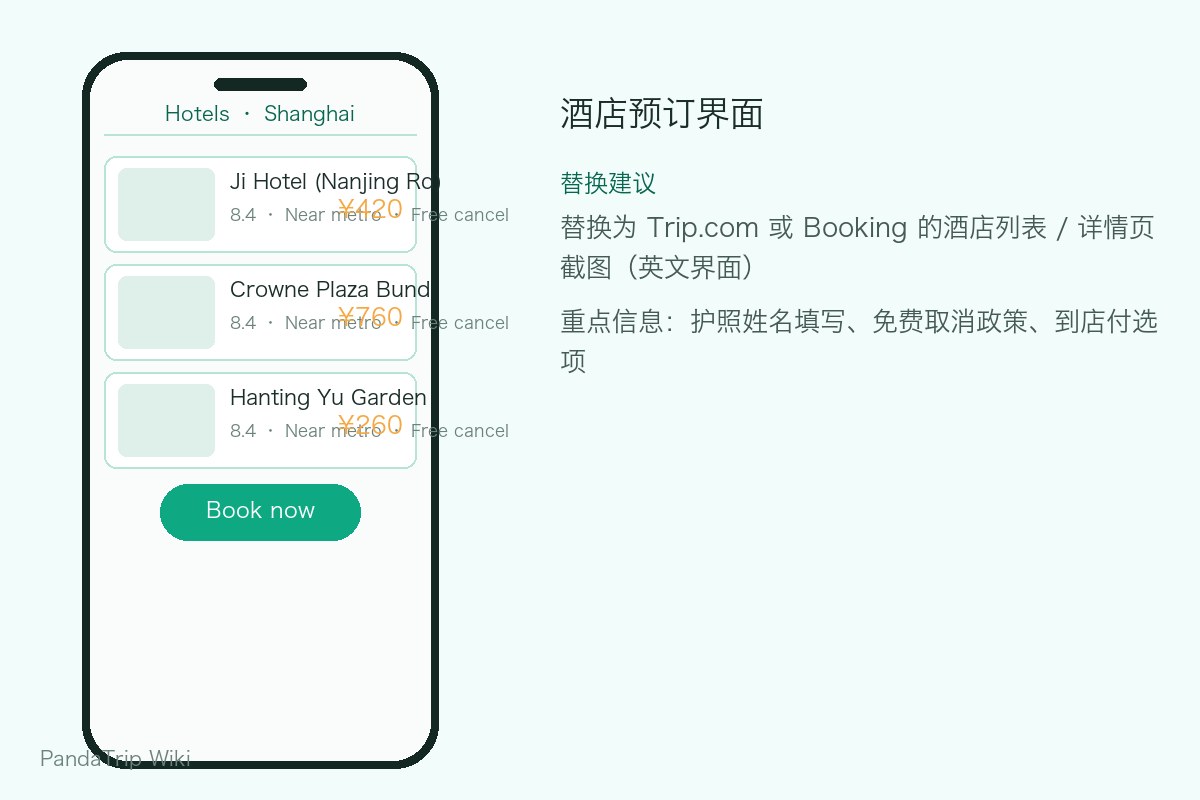
- Trip.com (the international version of Ctrip): The platform with the deepest access to Chinese hotel inventory, covering everything from five-star hotels to small-town guesthouses. It supports payment by international cards, an English-language interface, and entering passport details directly into the booking, making it the first choice for booking hotels in China.
- Booking.com / Agoda: Good coverage of international chains and upscale hotels, but noticeably thinner than Trip.com for small cities and local hotels; best suited to price comparison and “pay at the hotel” options.
- Airbnb: Withdrew from the Chinese mainland market in 2022; domestic guesthouse inventory has shrunk dramatically, with short-term rental demand flowing mainly to local platforms such as Tujia and Meituan — a high barrier for users who do not read Chinese.
- Hotel websites / WeChat Mini Programs: Occasionally cheaper, but the booking flow assumes a Chinese-speaking user; an option for advanced users.
Passport details: The name on the booking must match the passport spelling exactly (watch the surname/given-name order), and the original passport must be shown at check-in.
“No Foreign Guests”: Policy vs. Reality
The policy is clear: In 2024, the Ministry of Commerce, the Ministry of Public Security, the National Immigration Administration, and other agencies stated explicitly that the hotel industry may not refuse overseas guests on the grounds of “lacking foreign-guest qualification” — such refusals have no basis in law. The Measures for the Administration of Public Security of the Hotel Industry only require hotels to check guests' documents, register them truthfully, and submit lodging information to the public security authorities within 24 hours — the reporting obligation rests with the hotel, not the guest.
Reality remains uneven: Some budget chains, youth hostels, and independent hotels in smaller cities have front-desk systems that are not connected to passport registration, or staff unfamiliar with the procedure, and will still politely decline with “we can't register you.” Steps to take:
- Before booking, check the hotel's “international travelers” tag on Trip.com, or look through reviews for reports of refusals;
- If refused, cite the official policy (you can ask the front desk to look up the rule that “the hotel industry may not refuse foreign nationals on the grounds of lacking foreign-guest qualification”) — this resolves most cases;
- If the hotel will not budge, switch hotels and request a refund — platforms usually support such cancellations, and you can also call the 12345 hotline to file a complaint.
International chains (Marriott, IHG, Hilton, Accor, etc.) and high-star hotels never set this barrier — choose them if you want peace of mind.
Deposits and Payment
At check-in, hotels commonly take a deposit (RMB 300–1000 is typical), in one of two ways:
- Credit card pre-authorization: released after check-out, but foreign-card holds can take as long as 2–4 weeks to clear; it looks like a charge on your statement, but the money will come back;
- Cash deposit: refunded on the spot at check-out; recommended for short stays.
For room charges: high-end hotels take Visa/Mastercard without problems, while many mid-range and budget hotels accept only WeChat Pay/Alipay — linking a foreign card to Alipay remains the universal solution.
Guesthouses and Staying with Friends: The 24-Hour Registration Obligation
If you are not staying at a hotel, note this: Chinese law requires that when foreign travelers stay at non-hotel premises (a friend's home, a self-rented apartment, some guesthouses), either they or their host must report temporary accommodation registration to the local public security authorities within 24 hours. This used to mean a trip to the police station; since March 20, 2026, the National Immigration Administration has launched an online accommodation registration pilot that lets you file the registration yourself online — ask your host to confirm the local procedure before you set off.
Few people check whether you have registered, but the record is required for visa extensions and passport loss reports, so you are advised to follow the rules.
Three Booking Strategies
- Book early for Golden Week: Rooms tighten a month ahead of Spring Festival and National Day, prices double, and prepayment is often non-refundable (see the Golden Week Guide).
- Stay next to a metro station: Chinese cities are congested at all hours; a budget hotel by a metro station saves more time than a five-star property in the distant suburbs.
- Screenshot your confirmation: Check-in requires your passport plus a booking number; save a screenshot of the confirmation email — it also comes in handy if border inspection asks to see it.
Frequently asked questions
The hotel says it cannot accept foreign travelers. What should I do?
In 2024, the Ministry of Commerce, the Ministry of Public Security, and other agencies made clear that the hotel industry may not refuse to receive foreign nationals on the grounds of lacking foreign-guest qualification — such refusals have no legal basis. You can cite this policy when talking it through; if the hotel keeps refusing, call the 12345 hotline to complain or choose another hotel. International chains and high-star hotels almost never have this problem.
Do I need to register if I stay at a friend's home instead of a hotel?
Yes. The law requires that when foreign travelers stay at non-hotel premises, the guest or the host must report accommodation registration to the local public security authorities within 24 hours. Since March 20, 2026, the National Immigration Administration has been piloting online accommodation registration, which you can complete yourself online — no trip to the police station required.